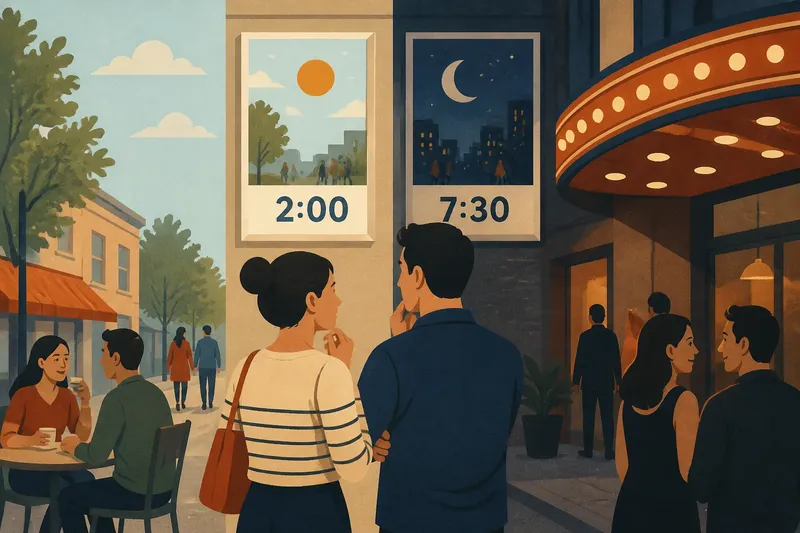
The Myth of the Perfect Seat
The perfect cinema seat depends on what matters to you: a clear view, easy conversation, room to settle in, or a comfortable exit afterward.
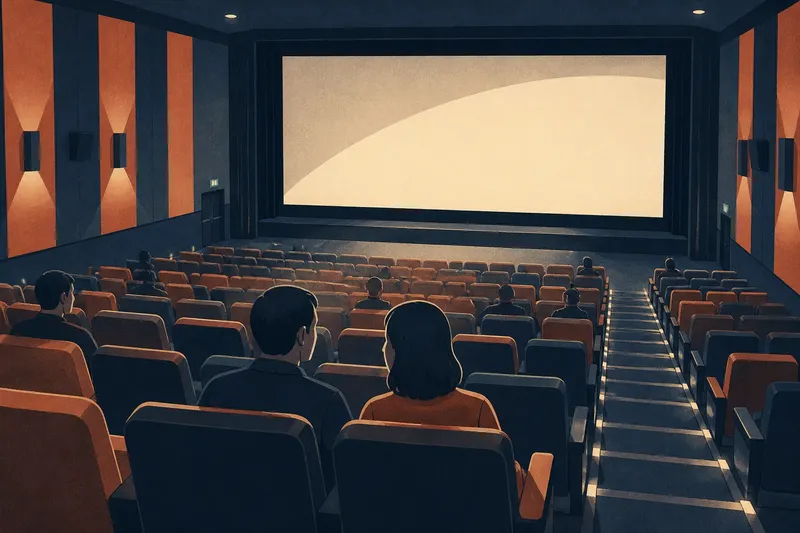
The best seat in a cinema is not always the one at the center. A seat can give you a carefully balanced view and still be wrong for a screening with a friend, a stiff neck, or a need to leave promptly. Choosing a cinema seat is less about finding a universal sweet spot than deciding which part of the outing you want the seat to support.
That decision is easier when you treat the room as a set of trade-offs. Screen distance changes how much of the image fills your attention; row position affects your sense of perspective; neighbors and aisles shape the social and practical parts of the evening. The right choice depends on the screening and on how you like to watch.
What do you want the seat to do?
Before opening the seating map, name your main priority. You might want to follow a large image without turning your head, share reactions quietly with someone, keep a little personal space, or avoid a difficult exit. A secondary preference can break a tie, but trying to optimize everything at once often leads back to the vague idea of “the middle.”
Seat maps simplify the room. They show rows and availability, but they cannot convey the full sensation of looking up at a screen, the way a side section feels from your chosen row, or how much room you will want once the lights go down. Use the map to narrow your options, then consider the kind of attention the film is likely to ask of you.
Which seat fits the way you watch?
Where should you sit if you want the screen to feel balanced?
Try a seat near the horizontal center if you want a relatively even view of the image. A middle section can make it easier to take in the whole screen without feeling that the picture is pulling strongly to one side. If you prefer a more encompassing view, a row farther back may feel calmer than the front, where your eyes have to travel more across a large image.
“Center” still needs context. In a small screening room, a central seat may feel close enough; in a room with a broad screen, you may prefer more distance. On an auditorium map, look at the screen’s width and the sections around it rather than assuming that the geometric center of every room produces the same experience.
What if you like a close, immersive view?
A forward seat can make the image feel enveloping and give visual details a stronger presence. It may suit a film whose scale and composition you want to feel physically, especially if you enjoy letting the screen occupy most of your field of view.
The trade-off is that a large image viewed from close range can ask more of your eyes and neck. If you are unsure, choose a seat that moves you closer without putting you right at the front. The best distance is personal, and an unfamiliar room may call for a less extreme choice.
When does an aisle seat make more sense?
An aisle seat suits someone who values a straightforward exit, wants room on one side, or expects to shift position during a long screening. It can also be useful when you are meeting someone and do not want to climb past a row of seated patrons.
The compromise is that an aisle can bring passing movement into your peripheral vision, particularly before the film starts or during a busy screening. If you want the convenience without giving up the feeling of being among the audience, look for an aisle a few seats in from a side wall when the layout permits.
How should you choose if you are sensitive to sound or movement?
For a quieter-feeling view of the film, look for a seat away from the main traffic routes and, if possible, away from the most active edges of the room. The center of a row can reduce the chance of people passing directly beside you, though it makes arrival and exit less convenient.
Sound balance is not always obvious from a map, and room design varies. If you have a preference for a particular section in a theater you visit often, use what you have noticed in that room; in a new cinema, choose a position that avoids the trade-off you find most distracting.
How do company and comfort change the choice?
For two people attending together, the useful question is not simply whether both can sit in the center. Consider whether you want to talk before the film, exchange a quiet reaction, or sit with a little space between you. Adjacent seats serve togetherness; seats with an aisle nearby may make settling in and leaving easier, while a pair farther from the aisle may feel less interrupted.
Imagine you and a friend have tickets for a long drama in a theater you do not know. You both want to watch closely, but one of you dislikes climbing over strangers and the other prefers not to sit near a side wall. Choosing two adjacent seats near the aisle, but not directly at its edge, could balance those needs; the observable difference is that you can sit together and have a simpler route out, while accepting a little more passing movement nearby.
Comfort also depends on what you already know about your body and the venue. Someone who likes to stretch their legs may value a seat near an aisle; someone who wants to settle without movement may prefer the middle of a row. If you know that looking upward or twisting toward one side makes a screening unpleasant, treat that as a real constraint, not a preference to overcome for a supposedly ideal view.
It is not worth spending a long time comparing tiny differences between nearby seats when the map cannot show them. A sensible choice among available options is usually more useful than trying to infer an exact viewing angle from a small diagram.
What should you check before booking?
- Screen distance: Decide whether you want a broad, relaxed view or a close, immersive one, then avoid the extreme that tends to bother you.
- Horizontal position: Check whether a side section would make you feel turned toward the screen; choose closer to the center if that matters to you.
- Row access: If leaving or arriving without disturbing others matters, compare aisle seats with seats deeper in the row.
- Who is coming with you: Confirm that the seats are together and that their position works for the kind of outing you want to share.
- Your comfort priorities: Think about legroom, posture, and how long you expect to sit, rather than choosing a seat only for its position on the map.
- The room itself: If you know the theater, draw on your own observations; if you do not, avoid making a very front- or side-heavy choice unless you actively want that perspective.
How should you choose for a particular screening?
The same seat can feel different depending on what you are going to see and how you intend to experience it. These questions help turn a general preference into a decision for this outing.
Where should you sit for a film with a very large image?
Choose a position that lets you take in the screen without having to keep shifting your gaze across it. For many viewers that means some distance from the front, but the right row depends on the size of the room and how immersive you want the image to feel.
What seat works for a quiet, attentive screening?
If uninterrupted attention matters most, consider a seat away from the aisle and other busy routes through the room. A central position can feel settled, while a row near an aisle may be preferable if access matters more than minimizing movement.
How do you choose when attending with a friend?
Start with adjacent seats, then decide whether a nearby aisle or a more central position better suits both of you. If one person has a strong preference about distance or access, make that the first constraint and use the other person’s preference to choose between the remaining options.
What if you do not know the theater?
Favor a moderate choice: avoid the very front and far edge unless you have a reason to seek them out. A seat near the middle of the room and not far to one side is a reasonable starting point, but it is a starting point rather than a rule for every cinema.
What does a good seat mean in the end?
A good seat lets you spend the screening attending to the film rather than negotiating with the room. For one person that means a balanced view; for another, it means a simple exit or an adjacent seat beside a friend. Your own priorities are more useful than a ranking that treats every audience member and every auditorium as interchangeable.
The next time you choose, use the map to rule out positions that conflict with your needs, then pick from what remains. That is a more reliable way to find your preferred cinema seat than chasing perfection: the room may change, the company may change, and your reason for going may change with them.