Matinee or Evening Screening: Two Different Kinds of Movie Outing
Matinee or evening screening? Choose a movie outing whose pace, company, and plans around the film fit the occasion, not just the start time.
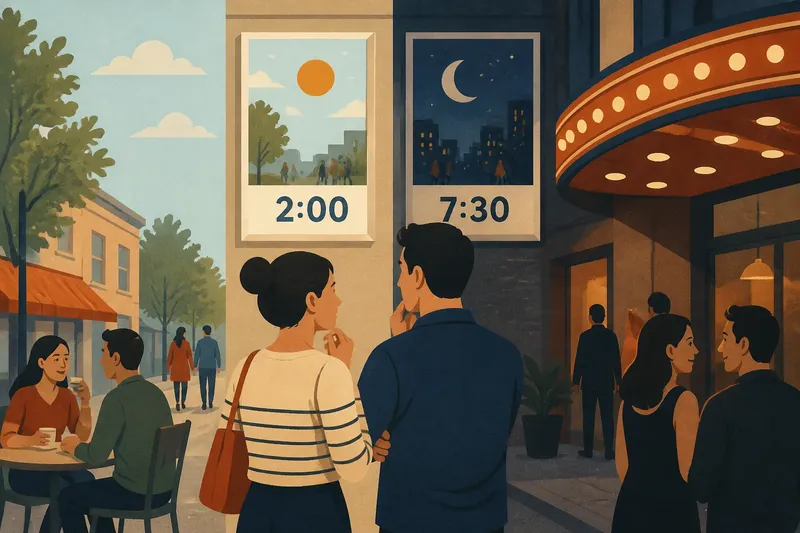
Choosing a matinee or evening screening is really a choice about the shape of the outing: how much room the film gets, what kind of company suits it, and what you want to do before and after. A daytime show can feel like one part of an open afternoon; an evening show can turn the same film into the occasion itself.
Start with the day you actually have, rather than an idealized version of it. The right screening is the one that fits your energy and the people you are meeting, while leaving enough space to watch without keeping one eye on the clock.
What kind of outing are you trying to make?
Before checking showtimes, name the occasion in plain terms. Are you fitting a film between errands, taking a child out, meeting a friend you want to talk with, or marking a night that should feel separate from routine? The answer points toward a different pace.
A matinee often works well when the cinema is one element in a day that continues afterward. You might pair it with lunch, a walk, or an early dinner, or simply return home with the evening still ahead. That open-ended quality can make the visit feel easy to arrange, though it can also make the film seem less like the center of the day.
An evening screening gives the film a more defined place in the schedule. Getting ready, traveling to the theater, and deciding what to do afterward can form a small sequence around the show. This can suit a date or a reunion with a friend, especially if you want to linger over conversation once the credits end.
Neither choice is inherently more thoughtful or more social. A quiet afternoon screening can leave a film in your mind for hours; a busy evening can make the outing feel lively without creating much time to talk. Choose the pace you want, not the one you think a proper movie occasion is supposed to have.
When does a matinee fit better?
Consider a matinee when your best attention comes earlier, or when the evening already has other claims on it. A daytime show can be a considerate choice for a family outing, a visit with someone who prefers an early return, or a film you want to discuss over a meal before the day ends.
It can also be a useful fit for a movie that feels like one stop in a larger plan. If you are meeting near the theater, you can agree to see the film and then decide whether to continue the afternoon together. That flexibility reduces the pressure to turn a casual invitation into a whole-night commitment.
Think about the mood of the film, too, without assuming that a particular genre belongs to a particular hour. A reflective drama may suit the spaciousness of a free afternoon; a comedy can sit neatly between lunch and a walk. But if you have been looking forward to dressing up or making a night of a premiere, a matinee may feel like it has arrived before the occasion you wanted.
Daylight outside the theater can also shape how you carry the film away. You may step into a familiar street, pick up groceries, and find that the story stays with you alongside ordinary tasks. If you want a stronger boundary between daily life and the movie, plan a few unhurried minutes afterward rather than rushing straight into errands.
What makes an evening screening feel different?
Evening is a natural fit when the film is the main event and you want the day to lead toward it. A meal beforehand can provide time to catch up; a drink or a walk afterward can give the group a place to compare reactions. The movie becomes a shared hinge between two conversations.
That shape is especially helpful when people are coming from work or other commitments. Instead of asking everyone to surrender a whole afternoon, you can meet at a time that gives the outing a clear beginning. It may be easier to invite someone to a specific show than to coordinate a broad, open-ended daytime plan.
Still, evening plans can feel crowded if travel, dinner, and the screening are packed together. A late finish may matter to someone who has an early start, and a long film can leave little appetite for a second activity. If the movie itself is what you care about, keep the surrounding plan simple and let the screening have the evening.
Atmosphere is personal, not a fixed property of the clock. The lobby may be quieter at one show and busier at another; the audience and the venue’s schedule matter as well. If a lively crowd is part of the appeal, choose a show likely to draw company, but do not count on a particular audience mood just because it is after dark.
How do you compare the actual showtimes?
Once you know the kind of outing you want, compare the practical details of the screenings you could attend. Check the listed start time, the film’s full running time, the theater location, and how you will get home. The feature may not begin exactly when you enter the auditorium, so leave room for the theater’s usual pre-show material rather than planning a close connection afterward.
Next, look at what surrounds the screening. A matinee is less convenient if it forces you to cross town in the middle of a workday; an evening show may be a poor fit if your group needs to be home early. Consider food and conversation as part of the plan, but do not add them automatically. A film and a simple trip home can be a satisfying outing on their own.
Say you and a friend both want to see a two-hour drama, but one of you has a morning commitment and the other is free all afternoon. You could choose a matinee, meet for a quick meal afterward, and leave the evening open; the observable result would be a shared film and conversation without turning the visit into a late night. If the friend would rather arrive after work and linger over dinner, an evening show may fit better, provided the return trip still feels manageable.
When schedules are flexible, ask each person what would make the outing feel good: time to talk, an early finish, or a sense of occasion. That question is more useful than simply asking which time is free. If you are choosing alone, make the same distinction for yourself.
Which screening suits your occasion?
Is a matinee better for a first date?
It can be, if you both prefer a low-pressure plan with an easy exit or a casual follow-up. An evening show may suit a first date that is meant to feel more ceremonial, but the film leaves less room for conversation during the outing itself.
Should children see a daytime or evening movie?
Think about the child’s usual rhythm, the length and tone of the film, and the trip home. A matinee may leave more time for a calm evening afterward, while a child who is comfortable with later plans may be happy at an evening show.
Which time is better for seeing a serious film?
Choose the time when you can give the movie your full attention and have a little breathing room afterward. Some people prefer the quiet of a daytime visit; others like the separation an evening plan creates from the rest of the day.
Does a matinee or evening show make a better group outing?
A matinee can work for a group with varied schedules if people want to add a meal or activity afterward. Evening may be easier for friends who are busy during the day, but keep the plan modest if coordinating a large group already takes effort.
How should you make the plan with other people?
Offer a real choice rather than a vague invitation: name a matinee and an evening option, then say what each would allow. “We could see the afternoon show and get something to eat, or go after work and keep the night open” gives your companion a useful basis for deciding.
For a group, settle the screening before adding extra plans. Different people may be able to join for the film but not dinner, or for dinner but not a late show. Treating those as separate choices makes it easier for someone to take part without having to commit to the whole itinerary.
Be clear about the tone you have in mind. If you want a quiet, focused visit, say so; if you would enjoy a meal and conversation afterward, mention that too. The same screening can serve as a simple shared activity or the anchor for a longer meeting, depending on what everyone expects.
What is not worth the effort is trying to engineer a perfect sequence around every screening. You do not need to find the ideal restaurant, invent a themed plan, or make the occasion look more elaborate than it feels. One clear meeting point and a realistic idea of what happens after the film are usually enough.
What should you leave room for after the credits?
Decide whether you want to talk immediately or let the film sit with you. A daytime screening often makes it easy to continue into an ordinary afternoon; an evening screening can invite a meal or a short walk, but it can also be satisfying to say goodbye outside the theater. There is no obligation to produce a verdict as soon as the lights come up.
If your companion wants to discuss the film and you need to leave, a small courtesy helps: mention the time constraint before the show, or suggest a later message. If you both have room, start with what stayed in your mind rather than asking whether the film was simply good. That keeps the exchange personal and leaves space for different reactions.
For the next movie outing, remember what the timing gave you. Perhaps the matinee made a family visit easier, or the evening show gave old friends enough time to reconnect. Matinee or evening screening is a useful choice to make deliberately, but the best measure is whether the pace suited the company and left the film room to be remembered.